
 Sophia Hart ( ADMIN )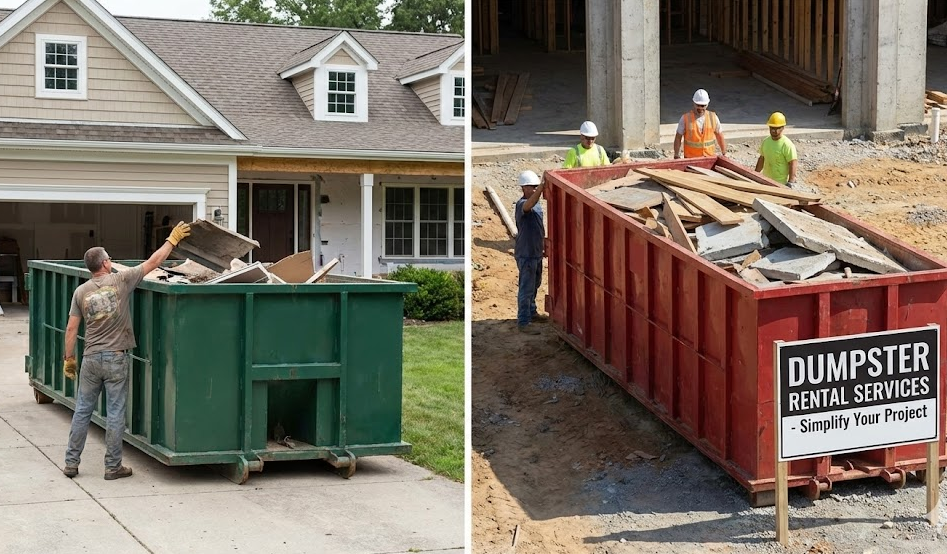
A dumpster rental can make waste removal significantly easier, whether you’re tackling a home project or managing a professional job site. While the basic service is the same, the needs of homeowners and contractors differ in important ways. Understanding these differences helps ensure you choose the right dumpster rental solution for your project, avoid unnecessary costs, and stay compliant with local regulations.
Below, we break down the key distinctions between dumpster rental services for homeowners and contractors.
Dumpster Rental Needs for Homeowners
Homeowners typically rent dumpsters for short-term, residential projects. These projects are often unpredictable in volume but limited in duration.
Common Homeowner Projects
- Home cleanouts and decluttering
- Basement, attic, or garage renovations
- Kitchen or bathroom remodels
- Roofing replacements
- Yard cleanups and landscaping
For these projects, a dumpster rental is usually required for a few days to a week, and size selection is critical. Homeowners often underestimate how much debris a project will generate, making guidance on dumpster sizing especially valuable.
Typical Dumpster Sizes for Homeowners
- Small dumpsters (10-yard or similar)
- Medium dumpsters (15–20 yard) for remodels or roofing projects
Placement is also a major consideration. Many homeowners place dumpsters in driveways or on residential streets, which may require local permits depending on municipal rules.
Dumpster Rental Needs for Contractors
Contractors, on the other hand, rely on dumpster rental services as part of their ongoing operations. These rentals are usually tied to commercial or construction projects and involve heavier materials and higher waste volumes.
Common Contractor Uses
- New construction projects
- Demolition work
- Commercial renovations
- Multi-unit roofing projects
- Industrial or manufacturing waste removal
Contractors typically need dumpsters that can handle heavier debris, such as concrete, roofing shingles, drywall, or metal. They also often require scheduled pickups or long-term rentals to keep job sites clean and compliant.
Key Considerations for Contractors
- Weight limits and material restrictions
- Job-site safety and accessibility
- Long-term or recurring dumpster rentals
- Coordination with project timelines
Because efficiency is critical on professional job sites, contractors often prioritize reliability and flexibility when choosing a dumpster rental provider.
Key Differences at a Glance
| Factor | Homeowners | Contractors |
|---|---|---|
| Project Duration | Short-term | Long-term or recurring |
| Dumpster Size | Small to medium | Medium to large |
| Waste Type | Household & renovation debris | Construction & industrial materials |
| Permits | Sometimes required | Often handled as part of job planning |
| Pickup Schedule | One-time | Scheduled or ongoing |
Choosing the Right Dumpster Rental
Whether you’re a homeowner planning a renovation or a contractor managing multiple job sites, selecting the right dumpster rental depends on understanding your project scope, debris type, and timeline.
Reputable providers like Cobblestone Waste Management often work with both residential and commercial customers, helping ensure dumpsters are properly sized and placed while following local disposal guidelines.
Final Thoughts
A dumpster rental is a practical solution for managing waste efficiently, but the needs of homeowners and contractors are far from identical. Homeowners benefit from simplicity and flexibility, while contractors require durability, scheduling consistency, and higher capacity.
By understanding these differences before renting, you can avoid delays, reduce costs, and keep your project running smoothly—no matter the scale.
For More Update and Stories Visit: Info Records