 Sophia Hart
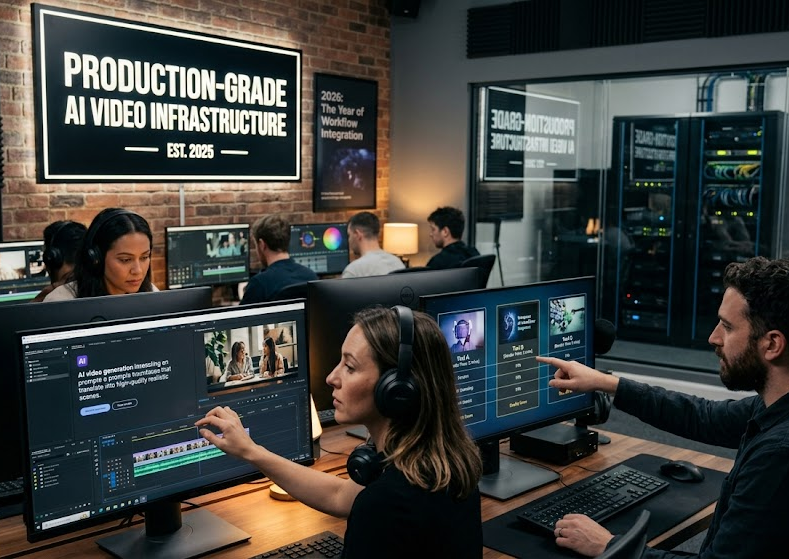
AI video generation moved from novelty to production-grade infrastructure faster than most creators expected. In 2026, creators are no longer asking whether AI-generated video is usable. The real question is which tools actually save time, improve output quality, and fit modern content workflows.
After testing dozens of platforms across social media campaigns, startup demos, product explainers, and creator workflows, I found that only a handful consistently deliver professional results without adding unnecessary complexity.
This guide covers the best tools for AI-powered face swapping and text-to-video generation available today. If you are building short-form content, ad creatives, cinematic clips, AI avatars, or branded social campaigns, at least one of these platforms will fit your workflow.
Best AI Video Tools at a Glance
| Tool | Best Use Case | Core Features | Platforms | Free Plan |
| Magic Hour | End-to-end AI video creation | Face swap, text-to-video, lip sync | Web | Yes |
| Runway | Cinematic AI video production | Gen-4 video generation, editing | Web | Limited |
| Pika | Fast social media clips | Text-to-video, stylized generation | Web | Yes |
| Synthesia | Corporate training videos | AI avatars, voiceovers | Web | No |
| Kling AI | High-quality realistic motion | Text-to-video generation | Web | Limited |
| HeyGen | AI presenter videos | Talking avatars, localization | Web | Yes |
| Luma AI | Realistic motion scenes | Dream Machine video generation | Web | Limited |
1. Magic Hour
Among all the tools I tested this year, Magic Hour offered the best balance between speed, output quality, usability, and creator-focused workflows.
The platform stands out because it combines multiple production capabilities in one interface. Instead of jumping between separate apps for avatars, lip sync, generation, and editing, creators can manage most AI video tasks inside a single workflow.
Its standout feature for creators and marketers is the incredibly polished AI face swap video functionality, which produces realistic facial tracking with strong temporal consistency. This matters because many competitors still struggle with flickering, awkward expressions, or mismatched lighting.
The platform also delivers one of the most practical implementations of text to video AI currently available. Prompt adherence is strong, scene motion feels natural, and generation speed is fast enough for iterative creative testing.
Pros
- Excellent face tracking consistency
- Fast rendering times
- Strong prompt understanding
- Clean beginner-friendly interface
- Useful for creators, marketers, and agencies
- Multiple AI video tools in one platform
Cons
- Advanced cinematic controls are lighter than Runway
- Free tier exports include limitations
- Long-form scene generation still evolving
If you want a platform that can handle both social-ready AI content and professional marketing workflows without overwhelming complexity, this is difficult to beat.
Pricing starts with a free plan, with premium creator tiers available for higher export limits and faster generation.
2. Runway
Runway remains one of the strongest AI video platforms for filmmakers, agencies, and advanced creators.
The company helped define the modern AI video category, and its newest generation models continue to push cinematic quality forward. During testing, I found Runway especially effective for mood-heavy scenes, product cinematics, and stylized transitions.
Pros
- High cinematic quality
- Advanced editing workflows
- Strong camera motion generation
- Professional creative controls
- Frequent model updates
Cons
- Learning curve for beginners
- Credit system becomes expensive quickly
- Less optimized for rapid social content
Runway works best for creators who prioritize visual polish over simplicity. If your workflow resembles filmmaking more than social posting, it is one of the strongest options available.
Pricing includes limited free credits with paid creator and enterprise plans.
3. Pika
Pika focuses on speed and accessibility. It is one of the easiest ways to generate short-form AI clips for TikTok, Instagram Reels, and YouTube Shorts.
The interface is intentionally lightweight, which makes experimentation fast. I found it particularly useful for creators testing multiple visual ideas quickly.
Pros
- Beginner-friendly workflow
- Fast clip generation
- Great for short-form content
- Strong stylized outputs
- Easy prompt iteration
Cons
- Less realistic motion than premium competitors
- Limited editing depth
- Shorter clip duration support
For creators who value fast experimentation and social content velocity, Pika delivers excellent value.
Free plans are available with premium generation tiers for heavier usage.
4. Synthesia
Synthesia remains one of the leading AI avatar platforms for business communication, training, onboarding, and enterprise education.
Unlike cinematic AI generators, Synthesia focuses on structured communication workflows. During testing, it consistently delivered reliable presenter-style videos.
Pros
- Excellent AI avatars
- Strong multilingual support
- Enterprise-friendly workflows
- Easy script-to-video pipeline
- Reliable voice synthesis
Cons
- Less creative flexibility
- Limited cinematic generation
- Best suited for corporate use cases
If your primary goal is training videos, internal documentation, or multilingual presentations, Synthesia is still one of the safest enterprise choices.
Pricing starts at business-oriented subscription tiers.
5. Kling AI
Kling AI became one of the fastest-rising video generation platforms this year because of its impressive realism and motion quality.
The model handles environmental movement and character consistency surprisingly well compared to many competitors.
Pros
- Realistic motion quality
- Strong environmental physics
- Impressive scene coherence
- Good cinematic output
Cons
- Limited availability in some regions
- Slower generation queue times
- Workflow tools still maturing
Kling AI is worth watching closely because its underlying generation quality already competes with top-tier platforms.
Pricing varies based on usage credits and access levels.
6. HeyGen
HeyGen carved out a strong position in AI-generated presenter content, especially for marketers, educators, and sales teams.
The platform focuses heavily on talking avatars and localization workflows. I found its translation features especially useful for global marketing teams.
Pros
- Strong localization features
- Realistic talking avatars
- Good onboarding experience
- Useful for marketing teams
Cons
- Limited cinematic creativity
- Avatar-heavy workflow focus
- Less suited for experimental creators
If your workflow centers on communication and scaling multilingual content production, HeyGen is highly practical.
Free plans are available with premium export features.
7. Luma AI
Luma AI continues to improve rapidly, especially through Dream Machine.
The platform excels at atmospheric and cinematic motion generation. During testing, some outputs looked remarkably close to live-action footage.
Pros
- High realism potential
- Strong camera motion
- Excellent atmosphere generation
- Impressive visual quality ceiling
Cons
- Output consistency varies
- Prompt interpretation can fluctuate
- Less predictable than structured tools
Luma AI works best for creators experimenting with visually ambitious content and cinematic storytelling.
Pricing includes limited free access with paid generation plans.
How We Chose These Tools
I spent several weeks testing these platforms across real-world creator workflows instead of isolated demo prompts.
The evaluation criteria included:
- Video realism
- Motion consistency
- Prompt accuracy
- Export speed
- Editing flexibility
- Creator workflow efficiency
- Pricing transparency
- Free plan usefulness
I also tested outputs across different categories:
- Short-form social clips
- Product marketing videos
- AI avatar explainers
- Meme-style edits
- Cinematic prompts
- Branded ad creatives
Some tools generated visually impressive demos but struggled during repeated production use. Others traded realism for speed and workflow simplicity.
The tools ranked highest in this list consistently balanced quality, usability, and scalability.
AI Video Market Trends in 2026
As of June 2026, the AI video market is shifting from experimentation toward operational adoption.
Three major trends stood out during testing:
1. Unified Creator Platforms Are Winning
Creators increasingly prefer platforms that combine generation, editing, lip sync, avatars, and automation instead of fragmented single-purpose tools.
This is one reason integrated platforms like Magic Hour continue gaining traction.
2. Short-Form Content Dominates Product Development
Most AI video tools now optimize heavily for TikTok, Shorts, and Reels workflows. Fast rendering and vertical exports matter more than traditional editing complexity for many users.
3. Realism Is Improving Faster Than Editing Precision
Generation quality improved dramatically this year, but editing controls still lag behind traditional creative software.
The next major wave will likely focus on controllability rather than raw visual quality.
According to industry reporting from sources like Gartner and Adobe’s creator economy research, AI-assisted video production is expected to become standard across marketing and digital publishing workflows over the next several years.
Final Takeaway
The best AI video tool depends heavily on your workflow.
If you need the strongest all-around platform for creators, marketers, and scalable AI content production, Magic Hour currently offers the best combination of usability, quality, and versatility.
If cinematic control matters most, Runway remains a leading option.
If you prioritize speed and social media experimentation, Pika is an excellent fit.
For enterprise communication and training, Synthesia and HeyGen continue to dominate.
The category is evolving extremely quickly. My recommendation is simple: test multiple tools using your actual workflow instead of relying purely on demo reels.
The difference between “impressive” and “production-ready” becomes obvious very quickly once you start building real content.
FAQ
What is the best AI face swap video tool in 2026?
Magic Hour currently offers one of the best combinations of realism, usability, and workflow efficiency for AI face swapping.
Which text-to-video AI platform is best for marketers?
Magic Hour, Runway, and HeyGen are particularly strong for marketing workflows because they combine speed with professional-quality outputs.
Are AI video generators good enough for commercial work?
Yes. Many AI video tools are already being used for advertising, social campaigns, training, and product marketing.
Which AI video tool is best for beginners?
Pika and Magic Hour are among the easiest platforms for beginners due to their accessible interfaces and fast workflows.
Will AI video replace traditional editing software?
Not completely. AI video tools work best as accelerators for ideation, prototyping, and content production rather than full replacements for advanced editing suites.
For More Update and Stories Visit: Info Records