 Sophia Hart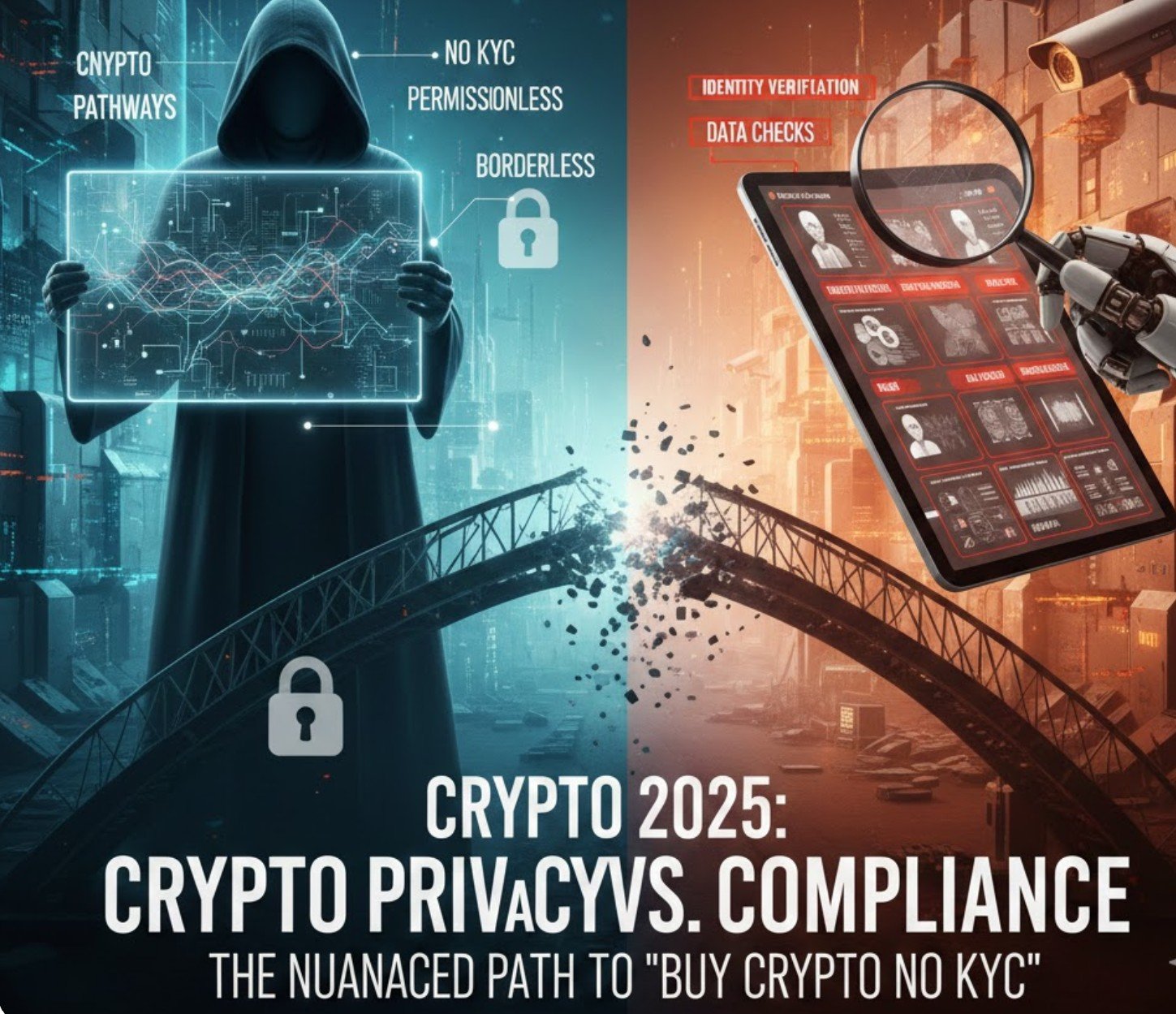
The cryptocurrency ecosystem has matured rapidly since its earliest days, yet the tension between privacy and compliance is only growing sharper. Globally, users face more identity verification, data checks, and surveillance—even as cryptocurrencies themselves promise borderless, open, and permissionless finance. But in 2025, the path to “buy crypto no KYC” is more nuanced, innovative, and relevant than ever.
This exhaustive guide explores today’s practical strategies, user motivations, regulatory headwinds, and market trends driving the rebirth of privacy coins and no-KYC crypto buying.
Privacy in Crisis: The Regulatory Backdrop
Centralized exchanges now require KYC for virtually all fiat-crypto transactions, making anonymity rare in mainstream markets. These procedures—originally intended to shield markets from fraud, tax evasion, and organized crime—are increasingly aggressive, demanding passports, proof of address, biometric scans, and even video calls.
For global regulators, transparent blockchains are a blessing: authorities can trace suspicious flows and build financial intelligence. For regular users, though, submitting personal info to online databases heightens their exposure to identity theft, leaks, or state overreach.
Yet, privacy isn’t only for the paranoid or criminal—millions need financial anonymity for lawful reasons ranging from political repression and discrimination to ordinary digital hygiene.
Privacy Coins: Technology as Resistance
In response, privacy coins like Monero, Zcash, Dash, Firo, and new entrants have doubled down on anonymity. These assets use advanced technologies to make transactions confidential, untraceable, and unlinkable:
- Ring Signatures: Mix multiple signatures so a sender cannot be isolated, foundational to Monero’s default privacy.
- Stealth Addresses: Conceal the recipient; only sender and receiver know the destination.
- Zero-Knowledge Proofs: Zcash, for example, uses zk-SNARKs and now zk-STARKs, letting users verify transactions on-chain without exposing sender, receiver, or sum.
- Hybrid Models: Some privacy coins allow users to choose privacy level—public, private, or somewhere in between.
- Network Obfuscation: Tor, I2P, and VPN integration further shield users from network surveillance.
The result: even as the broader crypto market struggles through ETF launches and regulatory “clean-ups,” privacy coin adoption has surged. In 2025, privacy coins are responsible for more than 11% of all crypto transactions globally—a rise over previous years as individual privacy concerns intensify.
Who Wants to Buy Crypto with No KYC—and Why?
The user base for “buy crypto no KYC” strategies is broader than ever:
- Humanitarian Donors: Privacy coins facilitate aid and remittances to regions under hostile governments.
- Freelancers & Global Workers: Millions receive crypto payouts from overseas clients without banking hurdles or reporting worries.
- Political Dissidents/Activists: For those at risk of asset seizure or persecution, privacy might literally be lifesaving.
- Business Owners: Small firms use privacy tokens to keep operational reserves far from competitors’ eyes.
- Ordinary Users: Many simply want to shield their financial identity from marketing algorithms, snooping banks, and third-party data brokers.
The reality: financial privacy, now reframed as self-protection, is becoming a mainstream concern.
Practical Ways to Buy Crypto with No KYC in 2025
Decentralized Exchanges (DEXs)
DEXs operate on smart contracts, allowing users to swap assets peer-to-peer without personal details. Connect a non-custodial wallet, select your trade, and complete the swap—no signups, no forms.
Peer-to-Peer (P2P) Platforms
Using chat apps, local groups, or reputation-driven digital marketplaces, buyers can agree to purchase crypto directly from other holders. Escrow and rating systems now make P2P deals safer and more scalable.
Crypto ATMs
Available in flexible jurisdictions, ATMs allow cash purchases of crypto (sometimes privacy coins) without ID, under set limits. These machines embrace the spirit of digital cash.
Gift Cards & Utility Vouchers
Innovative platforms accept popular retail gift cards or digital vouchers—exchanged for tokens as a workaround for traditional financial barriers.
Privacy-Driven Wallets
Wallets now ship with built-in mixers, Tor connections, obfuscation protocols, and multi-asset bridges, letting users receive privacy coins and swap them for mainstream cryptos securely.
The Safety Equation: Opportunities and Cautions
No-KYC crypto buying offers obvious privacy advantages—less risk of leaks, hacks, or intrusive state intervention. The flip side? It can attract scams, malicious actors, and technical hurdles.
Safety tips include:
- Starting with small amounts until trust is established.
- Using trustworthy wallets, DEXs, and P2P platforms with robust user reviews.
- Layering privacy with VPNs, private browsers, and coin mixers.
- Keeping abreast of local laws, as regulatory environments shift quickly.
- Never sharing personal info unless absolutely required.
Market Trends: Privacy Coins’ Unexpected Rally
Privacy coins in 2025 have posted double-digit gains, defying broader market stagnation. Zcash notably overtook rivals in market cap after a series of tech upgrades and a surge in shielded transactions. For reference, roughly one-quarter of Zcash’s entire circulating supply now resides in fully private shielded addresses—a sign that users don’t see privacy as advanced, but as a fundamental default.
Institutions are largely sidelined; privacy coins are for individuals. Capital flows track the rise of “digital cash”—immediate, permissionless, and hard to track. New wallets now enforce privacy as baseline, expanding the anonymity set for everyone who participates.
The Regulatory Battle: The Delisting Surge
More than seventy exchanges have delisted privacy coins worldwide in the past year alone as anti-money laundering rules tighten further. Some countries (Japan, South Korea) have outright bans on privacy coin trading; others apply heavy reporting requirements. Still, enforcement is uneven—regions in Asia, Africa, and Latin America remain havens for private token activity. In these areas, innovative business models and social networks underpin robust local privacy economies.
The Tech Evolution: Next-Gen Privacy
Key innovations in 2025 include:
- Adaptive Anonymity: Users can now regulate privacy level per transaction, balancing risk and compliance.
- Efficient zk-STARKs: Faster, scalable zero-knowledge proofs reduce transaction costs and congestion, unlocking privacy for DeFi, gaming, and commerce.
- Integrated DeFi: Privacy coins are increasingly compatible with decentralized finance protocols, blending confidentiality with liquidity and user choice.
- Selective Disclosure: Voluntary transparency features allow compliant users or businesses to share data upon request, opening doors to new institutional adoption.
- Quantum-Resistant Encryption: Anticipating future threats, privacy coins now wield strong cryptography against next-gen risks.
Social and Economic Impact
Privacy coins have carved out new use cases:
- Aid to oppressed or surveilled populations arrives smoothly in digital cash.
- Businesses and freelancers bypass traditional finance, using private tokens to convert income or secure operating capital.
- Communities rally around financial autonomy, supporting decentralized alternatives that don’t compromise on privacy.
Despite ongoing restrictions, privacy coins now occupy a small but critical share of total crypto market cap, with demand consistently rising in environments of heightened data collection and political volatility.
The Future: Privacy as a Choice, Not an Exception
Expect privacy features to mature and spread: either as built-in options on larger blockchains, or as enhancements on flexible DEXs. Mainstream users, institutions, and regulators must keep up with technical progress, framing privacy not as a loophole but as a legitimate utility.
As surveillance grows more sophisticated, the crypto world’s push for selectable privacy is both a technical and ethical response—a way to empower individuals without excluding future compliance needs.
Conclusion: Navigating No-KYC Crypto Buying for the Next Era
Buying crypto with no KYC is more possible, and more necessary, than ever. From privacy coin rallies to next-gen anonymity options, individuals worldwide are reclaiming autonomy over their finances. The best approach is informed, cautious, and technically savvy—making the most of defensive innovations while navigating shifting legal terrains.
Privacy in finance is not just about secrecy—it’s about control, safety, and empowerment. As crypto continues to evolve, the right to buy, own, and spend privately remains a rallying cry for innovation, resilience, and genuine freedom in the digital age.
For More Update and Stories Visit: Info Records